 Pakistan
Blessings of Zuhr Salah
The Zuhr prayer, also known as the midday prayer, is the second of the five daily prayers that Muslims perform. It has a profound significance as it provides a spiritual break during the busy hours of the day. Like other prayers, Zuhr has a specific number of Rak’aat (units of prayer), which are categorised into Faraiḍ (obligatory) and Sunnah. In this article, we will explore the Rak’aat for Zuhr Salah, focusing on the authentic teachings of the Holy Prophet صَلَّى اللهُ تَعَالَى عَلَيْهِ وَآلِهِ وَسَلَّم.
What Is Zuhr Salah?
The Zuhr prayer is performed after the sun passes its zenith, signifying the start of the afternoon. It is a chance for Muslims to remember Allah عَزَّوَجَلَّ and seek His guidance during the day. The timing of Zuhr varies based on geographical location and changes throughout the year.
The importance of Salah is emphasised in Islamic teachings. The Holy Prophet صَلَّى اللهُ تَعَالَى عَلَيْهِ وَآلِهِ وَسَلَّم has stated: The first matter that a bondsman will be brought to account for on Judgement Day is the Salah. If it is sound, then the rest of his deeds will be sound. (Sunan al-Tirmizi).
This statement underscores the significance of all daily prayers, including Zuhr.
How Many Rak’aat Are in Zuhr Salah?
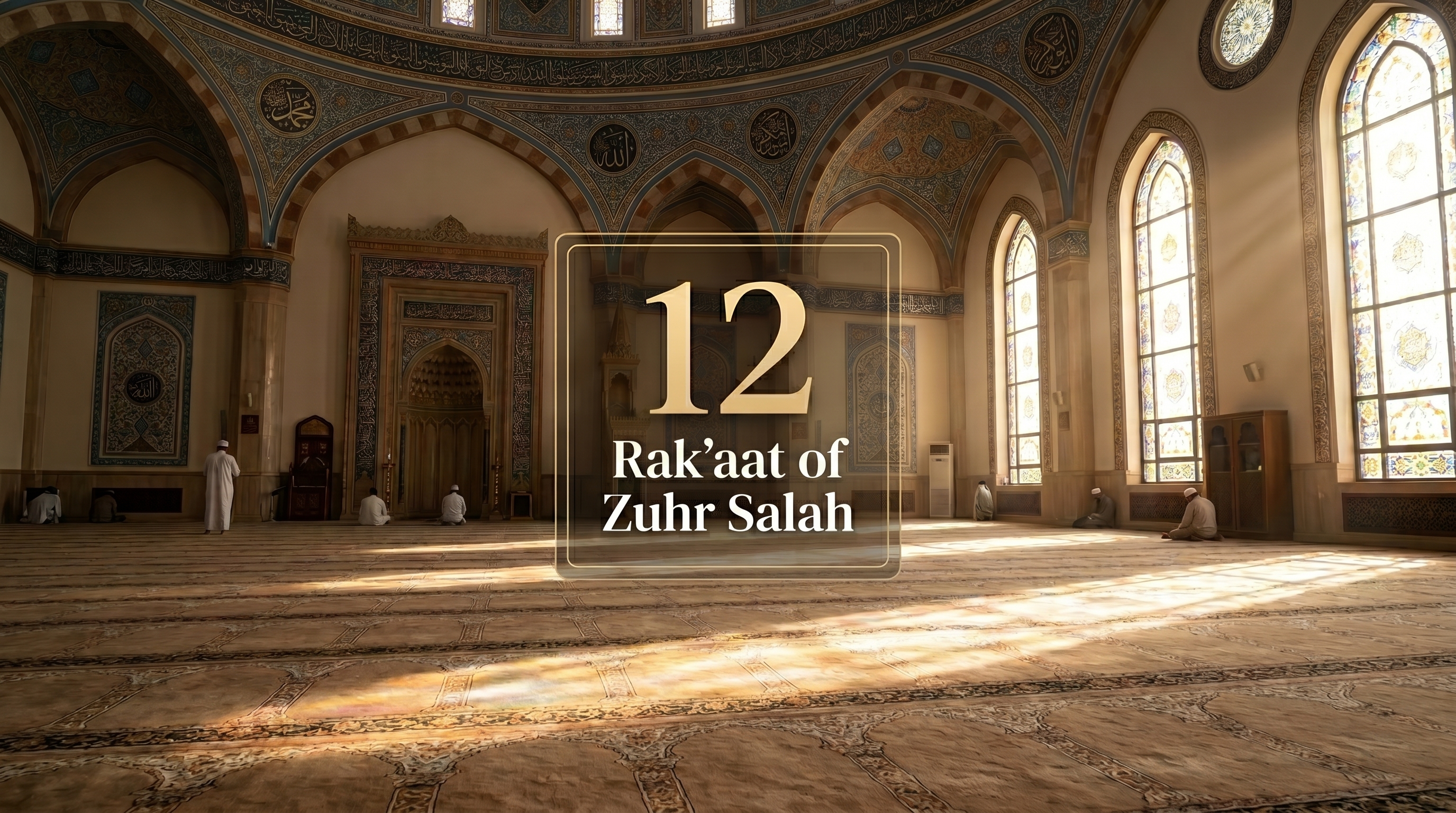
The Zuhr prayer consists of a total of 12 Rak’aat, divided into different categories. Here is the breakdown:
- 4 Sunnah Mu’akkadah: (Emphasised Sunnah, highly recommended before the obligatory part)
- 4 Faraiḍ: (Obligatory, the core part of Zuhr prayer)
- 2 Sunnah Mu’akkadah: (Emphasised Sunnah, recommended after the obligatory part)
- 2 Nafl: (Optional but beneficial for earning additional reward/Sawab)
Detailed Breakdown of Zuhr Salah Rak’aat
1. Sunnah Mu’akkadah (4 Rak’aat before the Farḍ) The 4 Sunnah Mu’akkadah Rak’aat before the Farḍ Rak’aat are highly recommended and carry great reward. The Beloved Prophet صَلَّى اللهُ تَعَالَى عَلَيْهِ وَآلِهِ وَسَلَّم was consistent in performing these Rak’aat and emphasised their importance. By performing them, Muslims follow the blessed example of the Holy Prophet صَلَّى اللهُ تَعَالَى عَلَيْهِ وَآلِهِ وَسَلَّم and earn additional reward.
2. Farḍ Rak’aat (4 Rak’aat) The 4 Farḍ Rak’aat are the obligatory units of Zuhr and form the core part of the prayer. Performing these Rak’aat is mandatory, and they must be performed with sincerity, mindfulness, and respect. Each Rak’at consists of standing (Qiyam), bowing (Rukū’), and prostrations (Sajdah), allowing the believer to display humility and dedication to Allah عَزَّوَجَلَّ.
3. Sunnah Mu’akkadah (2 Rak’aat after the Farḍ) The 2 Sunnah Mu’akkadah Rak’aat following the Farḍ are highly recommended and carry significant reward. The Holy Prophet صَلَّى اللهُ تَعَالَى عَلَيْهِ وَآلِهِ وَسَلَّم regularly observed these Sunnah Rak’aat after the obligatory Zuhr prayer. Performing them is a means of gaining additional blessings and protection from Allah عَزَّوَجَلَّ.
4. Nafl Rak’aat (2 Rak’aat) The 2 Nafl Rak’aat after the Sunnah Mu’akkadah are optional. Performing these Rak’aat is not obligatory, but for those who perform them, these Rak’aat offer an opportunity to earn additional reward and deepen one’s connection with Allah عَزَّوَجَلَّ.
Benefits of Performing Sunnah and Nafl Rak’aat
While the Farḍ Rak’aat are obligatory, the Sunnah and Nafl Rak’aat bring unique rewards and blessings.
- Increased Reward: Each additional Rak’at offers the believer an opportunity to earn further reward from Allah عَزَّوَجَلَّ.
- Following the Holy Prophet’s Tradition: Performing the Sunnah Mu’akkadah is a means of emulating the Beloved Prophet صَلَّى اللهُ تَعَالَى عَلَيْهِ وَآلِهِ وَسَلَّم.
- Enhanced Connection with Allah: Additional Rak’aat allow Muslims to spend more time in worship, fostering a deeper relationship with their Rab.
- Earning Allah’s Pleasure: Engaging in acts of Nafl worship is an excellent way to earn the pleasure and mercy of Allah عَزَّوَجَلَّ.
Timing of the Zuhr Prayer
In Pakistan, the timing of Zuhr varies based on the season. Generally, it starts shortly after midday, following the time when the sun passes its highest point. Being mindful of the time and performing Zuhr promptly is a demonstration of one's commitment to observing the pillars of Islam.
What to do if four (4) Sunan of Zuhr are missed?
In case of offering the Faraiḍ of Zuhr Salah first, offer the four Rak’aat of preceding Sunnah Salah after offering two Rak’aat of succeeding Sunnah Salah. Therefore, A’la Ḥazrat رَحْمَةُ اللهِ تَعَالَى عَلَيْهِ states, “The four Rak’aat of preceding Sunnah Salah, if not offered prior to Farḍ Salah, should be offered after Farḍ Salah, preferably after offering succeeding Sunnah Salah (two Rak’aat) as per superior decree of Islamic Jurisprudence, provided Zuhr timing has not yet elapsed.” (Fatawa Razaviyyah (Jadeed), pp. 148, vol. 8)
Final Thoughts
The Zuhr Salah structure provides Muslims with an opportunity for spiritual growth and reward. Performing the 4 Farḍ Rak’aat fulfils the daily obligation, while the Sunnah and Nafl Rak’aat allow for additional blessings and a greater sense of peace.
For a detailed understanding of the rulings of Ṣalāĥ and to gain more religious knowledge, please study the books published by Maktaba-tul-Madinah
May Allah عَزَّوَجَلَّ grant all Muslims the strength to uphold the daily prayers and the wisdom to perform each Rak’at with sincerity and devotion! Ameen.