
 Pakistan
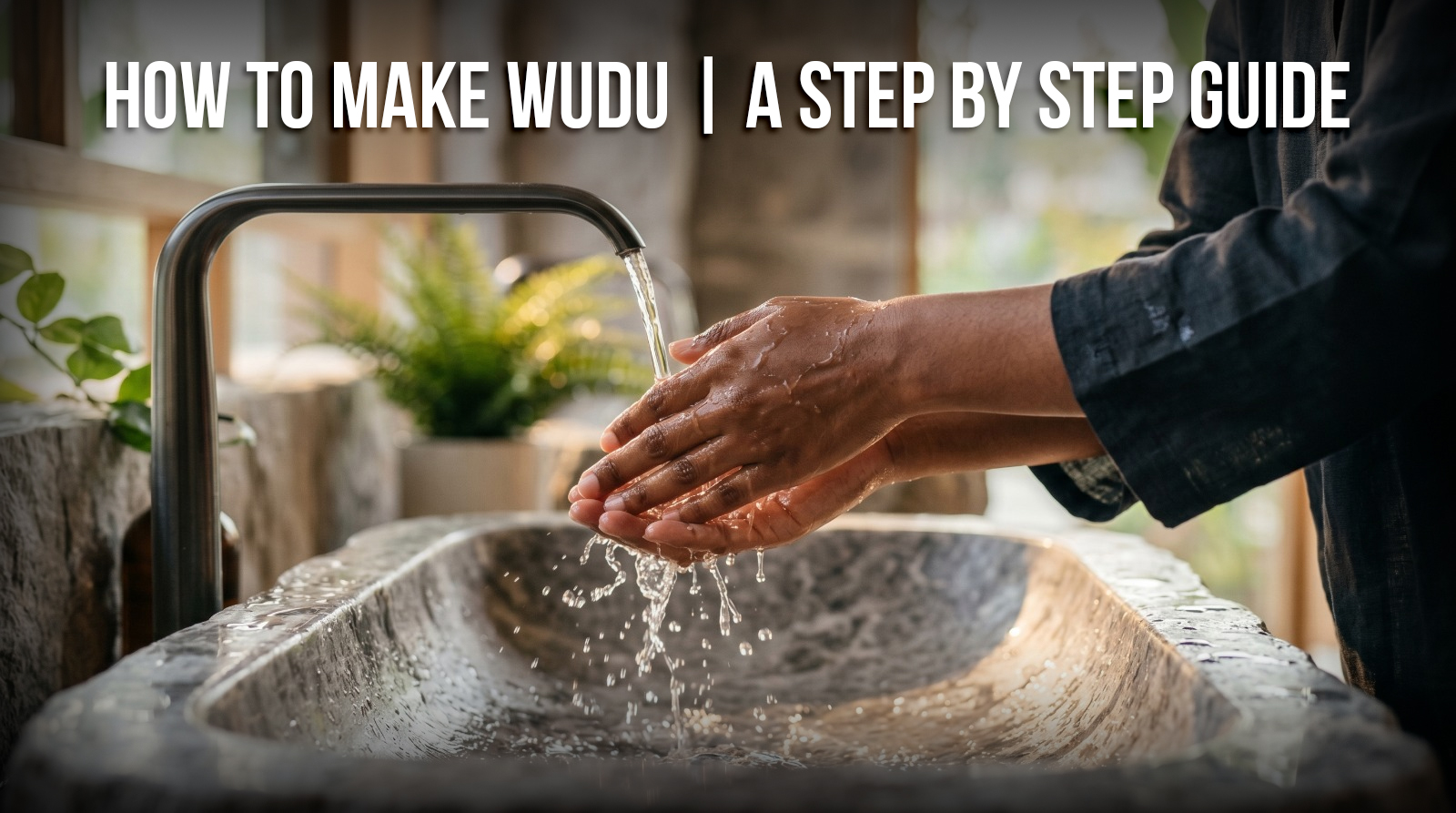
Four Faraid of Wudu
1. Washing the face
2. Washing both arms including the elbows
3. Moistening a quarter of the head
4. Washing both feet including the ankles.
(Fatawa-e-'Alamgiri, pp. 3, 4, 5, vol. 1, Bahar-e-Shari'at, pp. 288, vol. 1)
Definition of Washing
Washing an organ means flowing of at least two drops of water on each part of that organ. If the organ is simply moistened by rubbing a wet hand over it, or if only one drop of water flows over a section of it then it will not be considered washed and the Wudu or Ghusl will not be valid in that case. (Fatawa Radawiyyah (Jad id), pp. 218, vol. 1, Bahar-e-Shari'at, pp. 288, vol. 1
Methode of Wudu
1. Niyyat (Intention) aur Bismillah
It is Mustahab to sit on an elevated place facing Qiblah. To make intention for Wudu is Sunnah. Intention means to intend by heart. Verbal intention is preferable provided the same is present in the heart. Therefore, make intention as, "I am performing Wudu in order to fulfil the commandment of Allah عزوجل and to attain purity." Recite بِسْمِ الله as it is also a Sunnah rather say بِسْمِ اللهِ وَالْحَمْدُ لله as angels will continue writing good deeds as long as one is in the state of Wudu. (Majma'-uz-Zawaid, pp. 513, vol. 1, Hadiš 1112)
2. Washing Hand And Miswak
Wash both hands up to the wrists three times each and afterwards do Khilal (to intermix fingers of both hands to dampen the gaps) of the fingers (with the tap closed). Now use Miswak three times in right & left, upper & lower teeth and after each cycle, rinse the Miswak. Hujja-tul-Islam Imam Muhammad Ghazali عَلَيْهِ رَحْمَةُ اللهِ الوالى says, "Whilst using a Miswak, make intention to clean mouth for the recitation of the Holy Quran and for the Zikr (Remembrance) of Allah عَزَّ وَجَلٌ." (Ihya-ul-Ulüm, pp. 182, vol. 1)
3. Rinse Mouth and Clean the Nose
Now rinse your mouth three times with handfuls of water (closing the tap each time) using right hand making sure that water reaches all parts of the mouth and gargle as well if you are not in fasting. Now sniff water three times in nose up to soft flesh using three handfuls (now half handful is sufficient) of right hand (closing the tap each time) and if not in fasting, snuffle water up to the inside end of the nose. Now clean the nose by left hand (keeping the tap turned off) and insert small finger inside holes of the nose.
4. Washing the Face
Wash the whole face three times such that water must flow on every part from the top of the forehead (the point where the hair naturally begins to grow) to the bottom of the chin and from one earlobe to the other. If one has beard and he is not in the state of Iḥram (Special state for Ḥaj / 'Umrah) then do Khilal (with the tap turned off) of beard by inserting the fingers into the beard from the neck and bringing them out towards the front.
5. Washing the Arms (Including the Elbows)
Now wash the right arm from the tips of the fingers up to (and including) the elbow three times and then wash the left arm in the same manner. To wash up to half of the upper arm is Mustaḥab. Most people take a small amount of water in their hand and pour it over their arm towards the elbow three times. But in this method, there is risk that water would not flow over the edges of wrist and arm. Therefore, wash arms as mentioned. Now there is no need to pour a handful of water over the arms. In fact, doing this (without a valid justification) is wastage of water.
6. Performing Masah (Wiping) of the Head
Now (with the tap closed) perform moistening of the head. This should be done by joining the tips of the three fingers, other than the index fingers and thumbs, of both hands and placing them on the top of forehead. Move back these fingers from forehead to the back of the neck without letting the palms touch the head. Each palm should then be placed on either side of the head and pulled across the sides back towards the forehead. During this, the index fingers and thumbs should not touch the head at all.
7. Wiping the Ears and Neck
Now use the index fingers to wipe the insides of the ears, the thumbs for the back of ears and the small fingers should be inserted inside the holes of ears. Now moisten the back of the neck using the back of fingers of both hands. Some people, in addition, wipe the front of the neck, the forearms and wrists; this is not Sunnah. Make a habit of turning the tap off before wiping the head. To waste water by leaving the tap open fully or partially is a sin.
8. Washing the Feet and Khilal of the Toes
Now wash both feet three times, first the right and then the left, beginning from the toes up to the top of the ankles. It is Mustaḥab to wash up to halfway up the shin. To do Khilal between the fingers of both feet is Sunnah. The tap should be kept turned off during Khilal. Its Mustaḥab method is to start doing Khilal from little toe of the right foot to its big toe using the small finger of the left hand, and then, doing Khilal from the big toe of the left foot to its little toe using the same small finger of the left hand.
Du'a After Wudu
اللَّهُمَّ اجْعَلْنِي مِنَ التَّوَّابِينَ وَاجْعَلْنِي مِنَ الْمُتَطَهِّرِينَ
Translation: "O Allah! Make me amongst those who repent abundantly and make me amongst those who stay clean."
(Jami Tirmizi, pp. 121, vol. 1, Hadith 55)
Fourteen Sunan of Wudu
Some Sunan and Mustaḥab acts have already been mentioned under the heading “Method of Wudu (Ḥanafi).” Further details are as under.
1.Making intention
2.Reading بِسْمِ الله . If بِسْمِ اللهِ وَالْحَمْدُ لِلهِ is read before making Wudu, angels will write good deeds for him as long as one is in the state of Wudu.
(Majma'-uz-Zawaid, pp. 513, vol. 1, Hadiš 1112)
3. Washing both hands up to the wrists three times
4.Using Miswak three times
5.Rinsing the mouth three times using three handfuls of water
6. Gargling, if not in fasting
7. Sniffing water into the nose three times using three half handfuls of water
8. Doing Khilal of beard (when not in the state of Iḥram)
9. Doing Khilal of the hand fingers
10. Doing Khilal of foot toes
11. Moistening the whole head only once
12. Moistening the ears
13. Maintaining the order of the Faraid (i.e. washing the face first, then the arms, then wiping the head and then washing the feet)
14. Washing next part before the previously washed one dries. (Bahare-Shari’at, pp. 293, 294, vol. 1)
Twenty-Nine Mustaḥabbat of Wudu
1. Facing the Qiblah 2. Making Wudu at an elevated place
3. Making Wudu sitting
4. Stroking hand on organs while washing them
5. Doing Wudu calmly
6. Moistening the organs of Wudu prior to washing, especially in winter
7. Avoiding taking assistance in making Wudu from anyone without necessity
8. Rinsing the mouth using the right hand
Seven Benefits of Keeping Wudu
Imam-e-Ahl-e-Sunnat Imam Ahmad Raza Khan عَلَيْهِ رَحْمَةُ الرَّحمن says "Some saints رَحِمَهُمُ اللهُ تَعَالَى have said that anyone who stays in a state of Wudu at all times may be awarded with seven bounties by Allah عَزَّوَجَلَّ.
1. The holy pen will keep on writing good deeds for him.
2. His organs will perform Tasbih of Allah.
3. He will never miss his Takbir-e-Tahrimah (first Takbir of Salah).
4. When he sleeps, Allah sends Angels who will protect him from the evils of jinns and human beings.
5. He will feel easiness in severe fits of death.
6. He will remain in the safeguard of Allah as long as he is in the state of Wudu.
(Fatawa Radawiyyah (Jadid), pp. 702, 703)
The Whole Body Purified
According to summary of two sayings of the Prophet of mankind, the peace of our heart and mind, the most generous and kind صلى الله تعالى عليه واله وسلم "The person who begins Wudu by saying بسم الله his whole body from head to toe gets purified and the one who does not say بِسْمِ الله before Wudu, only washed portion of his body gets purified." (Sunan Dar Quțni, pp. 108, 109, vol. 1, Hadiš 228, 229)
Fifteen Makruhat of Wudu
1. Sitting in a vile place for Wudu
2. Draining the water used in Wudu in a vile place
3. Dripping water droplets from wet Wudu organs into ewer etc. (While washing the face, drops of water usually fall into water carried in the hands. This should be avoided.)
4. Spitting saliva, phlegm or rinsing mouth in the direction of Qiblah
5. Using water in excess (Şadr-ush-Shariah Mufti Maulana Amjad Ali رحمة الله عليه says in Bahar-e-Shari'at Part two, Page 23, Published in Madina-tul-Murshid Bareilly Sharif, "Half a handful of water is sufficient for sniffing into the nose, so taking a complete handful for nose is wastage.")
6. Using so less quantity of water that Sunnah cannot be followed. (Neither turn the tap on so much that causes wastage of water nor so less that causes difficulty in following Sunnah; instead it should be moderate.)
7. Splashing water on face
8. Blowing onto water while pouring over the face
9. Washing the face with only one hand as this is a custom of Rawafid and Hindus 10. Wiping the front of the neck
11. Rinsing the mouth or sniffing water into the nose using left hand
12. Cleaning the nose with the right hand
13. Using three sets of unused water to moisten the head three times.
14. Using hot water heated by sun beams
15. Closing the eyes and lips tightly. If these parts remained unwashed due to be kept tightly closed, the Wudu would not be complete. To abandon any Sunnah of Wudu is Makruh and to leave any Makruh of Wudu is Sunnah. (Bahar-e-Shari’at, pp. 300-301, vol. 1)
When does Vomiting Nullify One’s Wudu?
Vomiting food or water that is a mouthful invalidates Wudu. It is considered a mouthful when it cannot be prevented easily. This vomit is as impure as urine, so it is vital to protect the clothes and body from being stained by it. (Bahar-e-Shari’at, pp. 306, 390 etc, vol. 1)
Urine and Vomit of an Infant
1. The urine of an infant, even a one day old, is as impure as of anybody else. (Baĥār-e-Sharī’at, pp. 390, vol. 1)
2. If an infant vomits a mouthful of milk, it is as impure as urine, but if the milk has not reached the stomach and has reversed from the chest, it will not be impure. (Baĥār-e-Sharī’at, pp. 310, vol. 1)
Conclusion: The Importance of Perfecting Wudu
Wudu is not merely a physical act of cleansing but a spiritual gateway to the presence of Allah عَزَّوَجَلَّ. By following the Faraid, Sunan, and Mustahabbat with sincerity, a believer achieves both physical purity and inner peace.
The Spiritual Essence of Wudu One should always remember that every drop of water used in Wudu according to the Sunnah washes away sins. As mentioned in the Hadith, starting with بِسْمِ الله ensures the purification of the entire body. Therefore, it is essential to avoid Makruhat, such as wasting water or splashing it forcefully on the face, as these acts diminish the spiritual rewards of the ritual.
A Path to Constant Blessings Staying in a state of Wudu is a practice of the pious. It serves as a shield against the whispers of Shaitan and a source of continuous good deeds recorded by the angels. By perfecting our Wudu, we ensure that our Salah and other acts of worship are accepted in the court of Allah عَزَّوَجَلَّ.
Summary of Precautions
- Validity: Ensure that at least two drops of water flow over each organ to meet the definition of 'Washing'.
- Water Conservation: Avoid wastage of water (Israf), especially during Khilal or while wiping the head, as it is a sin.
- Mindfulness: Always be cautious of factors that nullify Wudu, such as mouthful vomiting or other impurities, to remain in a valid state for Ibadah.
May Allah عَزَّوَجَلَّ grant us the Tawfiq to perform Wudu according to the beautiful Sunnah of the Holy Prophet صَلَّى اللّٰہُ تَعَالٰی عَلَیْہِ وَاٰلِہٖ وَسَلَّمَ and keep us amongst those who stay clean and pure. (Amin)