 Pakistan
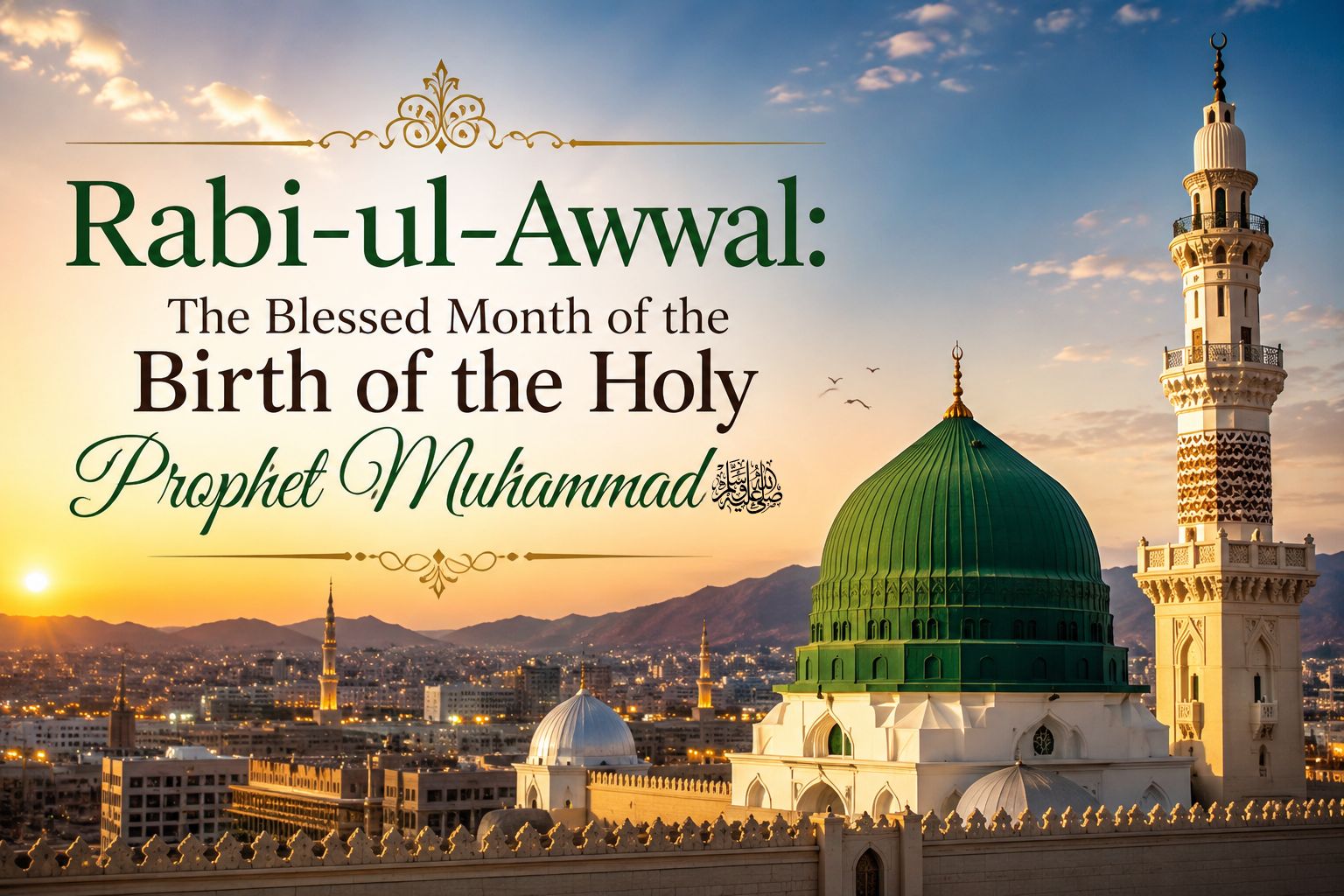
Rabi-ul-Awwal is the third month of the Islamic calendar and holds immense significance for Muslims around the world. Its special status is closely connected to the blessed birth of the Beloved Prophet Muhammad صلّی اللہ علیہ واٰلہ وسلّم, who was sent by Almighty Allah عزّوجلّ as a mercy for all creation.
The Holy Prophet صلّی اللہ تعالٰی علیہ واٰلہ وسلّم was born in the sacred city of Makkah on Monday, the 12th of Rabi-ul-Awwal, at the time of dawn. His arrival into this world marked an event of unparalleled blessings for humanity.
Read more about Rabi-ul-Awwal in this book: Rabi ul Awal Ki Khoobiyan
The Blessed Birth of the Holy Prophet ﷺ
Islamic scholars have stated that the night on which the Holy Prophet صلّی اللہ علیہ واٰلہ وسلّم was born is even more virtuous than Layla-tul-Qadr (The Night of Power). Their reasoning is that although angels descend to the earth on Layla-tul-Qadr, on the 12th night of Rabi-ul-Awwal, the Mercy for all creation himself came into the world.
Another distinction mentioned by scholars is that the blessings of Layla-tul-Qadr are received by Muslims, whereas the birth of the Holy Prophet صلّی اللہ علیہ واٰلہ وسلّم brought Allah’s mercy to all of creation, as declared in the Holy Quran:
وَ مَاۤ اَرْسَلْنٰكَ اِلَّا رَحْمَةً لِّلْعٰلَمِیْنَ
“And We did not send you (O Beloved) but as mercy for all the worlds.” — (Surah Anbiya 21:107)
Read the complete biography of the Holy Prophet صلّی اللہ علیہ واٰلہ وسلّم in The Sublime Biography of The Final Messenger Of Allah ( (ﷺ
Rejoicing Over Allah Almighty's Mercy
There is no doubt that the Holy Prophet صلّی اللہ علیہ واٰلہ وسلّم was sent as mercy for all creation. A day upon which Allah's (عزّوجلّ) mercy descends is certainly a day of happiness and gratitude.
Allah عزّوجلّ states in the Holy Quran:
قُلْ بِفَضْلِ اللّٰهِ وَ بِرَحْمَتِهٖ فَبِذٰلِكَ فَلْیَفْرَحُوْاؕ-هُوَ خَیْرٌ مِّمَّا یَجْمَعُوْنَ
“Say, “Only with the Grace of Allah and His Mercy they should rejoice; this is better than that which they amass.”
— (Surah Yunus 10:58)
The Holy Quran instructs believers to rejoice over Allah's mercy, and it identifies the greatest manifestation of that mercy as the Holy Prophet صلّی اللہ علیہ واٰلہ وسلّم.
The Incident of Abu Lahab and Suwaybah
The News of the Blessed Birth
Abu Lahab, the paternal uncle of the Holy Prophet صلّی اللہ علیہ واٰلہ وسلّم, owned a slave girl named Suwaybah. Although he later became one of the strongest opponents of Islam after the declaration of Prophethood, he reacted differently when he first heard the news of his nephew's birth.
When Suwaybah informed him of the blessed birth, Abu Lahab freed her as a reward for bringing him the news.
What Happened After His Death?
After Abu Lahab passed away, one of his relatives saw him suffering in a dream and asked about his condition. Abu Lahab replied:
“I did not receive any goodness after leaving you.”
He then pointed towards a hole beneath his thumb and said:
“Except this, as I am fed with water from this because I freed my slave girl, Suwaybah.”
(Reference: Musannaf Abdul Razzaq)
Explanation by Scholars
Shaikh Allama Badr-ud-Din Ayni رحمۃ اللہ علیہ explained:
“That indication means that he is given some water.” — (Ref: Umda-tul-Qari)
Commenting on this narration, Sayyiduna Shaikh Abdul Haq Muhaddis Dehelwi رحمۃ اللہ علیہ wrote:
“In this incident, there is credible evidence for those who celebrate the birth of the Noble Prophet صلّی اللہ علیہ واٰلہ وسلّم and spend their wealth on this auspicious occasion. Abu Lahab, who was a staunch unbeliever, was benefitted due to rejoicing and freeing his slave girl, Suwaybah, upon hearing the news of the blessed birth of the Holy Prophet صلّی اللہ علیہ واٰلہ وسلّم. Now imagine how great the reward will be for the Muslim spending his wealth whole-heartedly on this occasion. However, it is necessary to avoid songs and music in Meelad gathering.” — (Ref: Madarij-un-Nubuwwah)
Allama Ibn-e-Jawzi رحمۃ اللہ علیہ also states that if an unbeliever like Abu Lahab—whose condemnation is explicitly mentioned in Surah Lahab—received such benefit, then the reward of a Muslim who celebrates the blessed birth of the Noble Prophet صلّی اللہ علیہ واٰلہ وسلّم will be far greater. He says that Almighty Allah عزّوجلّ will, through His immense mercy, admit such a believer into the gardens of peace.
The Importance of Meelad Gatherings
Celebrating Meelad and showing devotion on this blessed occasion is described as a sign of Iman. It further states that celebrating this day is supported by the Quran, Hadith, and the statements of pious predecessors.
What Happens in a Meelad Gathering?
Meelad gathering generally includes the following activities:
● Muslims gather together in one place.
● An Islamic scholar speaks about the blessed birth of the Holy Prophet صلّی اللہ علیہ واٰلہ وسلّم.
● Authentic narrations regarding his miracles, noble character, virtues, excellence, and status are presented.
● Durood-o-Salam is recited while respectfully standing.
● Sweets are distributed among fellow Muslims and the poor after offering Fatiha with the intention of conveying its reward to the Holy Prophet صلّی اللہ علیہ واٰلہ وسلّم.
● Supplications are made for the needs of Muslims in this world and the Hereafter.
These practices are supported by the Quran, Sunnah, and the statements of Islamic scholars.
The Holy Quran Mentions the Arrival of the Holy Prophet ﷺ
Almighty Allah عزّوجلّ Himself speaks about the arrival of the Holy Prophet صلّی اللہ علیہ واٰلہ وسلّم in the Holy Quran:
لَقَدْ جَآءَكُمْ رَسُوْلٌ مِّنْ اَنْفُسِكُمْ عَزِیْزٌ عَلَیْهِ مَا عَنِتُّمْ حَرِیْصٌ عَلَیْكُمْ بِالْمُؤْمِنِیْنَ رَءُوْفٌ رَّحِیْمٌ
“Surely there has come to you an exalted Messenger from among you, anxious is he by what you endure, deeply concerned for your wellbeing, exceptionally gracious, merciful to the believers.” — (Surah Taubah 9:128)
This verse highlights three important aspects:
1. The Arrival of the Noble Messengerﷺ
The words "Indeed there has come to you a Exalted Messenger" refer to the blessed arrival of the Holy Prophet صلّی اللہ علیہ واٰلہ وسلّم.
2. His Noble Lineage
The words "from among you" describe the blessed lineage of the Holy Prophet صلّی اللہ علیہ واٰلہ وسلّم.
3. His Noble Qualities
The words, "He is deeply concerned for your wellbeing. He is exceptionally gracious, merciful to the believers." describe the noble qualities and praise of the Holy Prophet صلّی اللہ علیہ واٰلہ وسلّم.
These three themes are commonly discussed during Meelad gatherings.
Read about the blessings of Meelad in this booklet: Mawlid Enthusiast King
Fasting on Mondays
Sayyiduna Qatada رضی اللہ عنہ narrated that the Holy Prophet صلّی اللہ علیہ واٰلہ وسلّم was asked why he observed fasting every Monday.
The Holy Prophet صلّی اللہ علیہ واٰلہ وسلّم replied:
“I was born on this day and the revelation descended upon me on the same day.” — (Ref: Sahih Muslim)
Statement of Imam Qastalani
The commentator of Sahih Bukhari, Sayyiduna Imam Qastalani رحمۃ اللہ علیہ, stated:
“One of the tried-and-true blessing of celebrating Meelad of the Holy Prophet صلّی اللہ علیہ واٰلہ وسلّم is that peace and tranquility prevails throughout the year and every wish is fulfilled sooner. May Almighty Allah عزّوجلّ have mercy on the one who marks the nights of the month of Meelad like Eid.”
— (Ref: Al-Mawahib Al-Ladunniyah)
Conclusion
Rabi-ul-Awwal is a month of immense blessings because it marks the birth of the Holy Prophet Muhammad صلّی اللہ علیہ واٰلہ وسلّم, who was sent as a mercy for the entire creation. May Almighty Allah عزّوجلّ enable us to celebrate the blessed birth of the Holy Prophet صلّی اللہ علیہ واٰلہ وسلّم according to the guidelines of Sharia, bless us through His grace, and grant us the neighborhood of the Holy Prophet صلّی اللہ علیہ واٰلہ وسلّم in Paradise.
To learn more about the life of the Holy Prophet صلّی اللہ علیہ واٰلہ وسلّم, you can buy the following books from Maktabat-ul-Madina.
● Seerat-e-Mustafa صلّی اللہ علیہ واٰلہ وسلّم